How to Teach Multiplication to Grade 3: A Simple Guide for Parents and Teachers
Teaching multiplication to a Grade 3 student can feel like a big step.
Children are moving beyond simple addition and subtraction and beginning to work with multiplication, division, word problems, and multiplication facts.
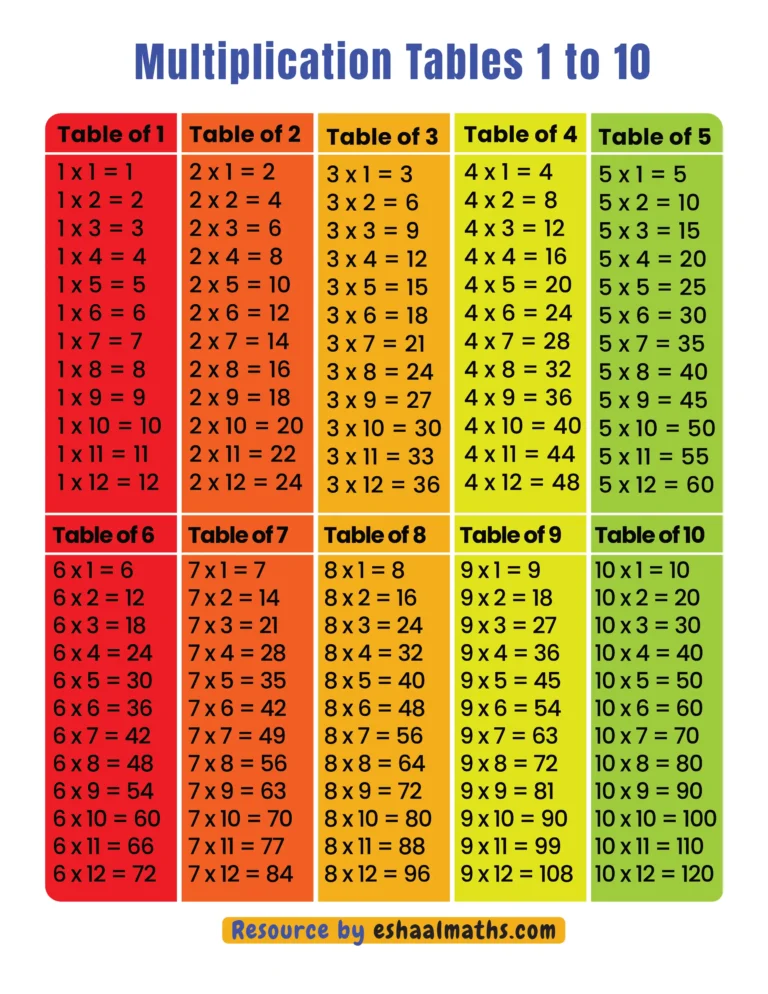
The good news is that you don’t have to start by asking a child to memorize every multiplication table.
A better place to start is helping them understand what multiplication actually means.
Once a child understands multiplication as equal groups, arrays, repeated groups, and number relationships, learning the facts becomes much easier.
In this guide, I’ll show you how to teach multiplication to Grade 3 in a simple, practical way.
What Should a Grade 3 Student Know About Multiplication?
By Grade 3, students are typically expected to work with multiplication and division within 100, solve multiplication word problems, understand equal groups and arrays, and build fluency with basic multiplication facts.
That does not mean every child will master everything at exactly the same speed.
Some children will quickly remember facts such as:
3 × 4 = 12
5 × 6 = 30
8 × 7 = 56
Others may still need pictures, repeated addition, skip counting, or other strategies.
The goal is not simply to make a child memorize answers.
The goal is to help them understand the relationships between numbers so they can work out facts they don’t remember yet.
Start With What Multiplication Means
Before focusing heavily on multiplication tables, make sure the child understands the idea of equal groups.
For example:
3 × 4
can mean:
3 groups of 4
You can show this with objects:
4 + 4 + 4 = 12
So:
3 × 4 = 12
This gives the child a visual connection between addition and multiplication.
You can use almost anything around the house for this.
Try:
- 3 groups of 4 pencils
- 5 groups of 2 buttons
- 4 groups of 6 blocks
- 2 groups of 8 coins
Then ask:
How many groups are there?
How many are in each group?
How many are there altogether?
These simple questions help children understand what the multiplication equation represents.
Equal groups and arrays are important ways for Grade 3 students to represent multiplication.
Use Arrays to Make Multiplication Visual
Arrays are one of my favorite ways to introduce multiplication because children can actually see the groups.
An array is simply objects arranged in rows and columns.
For example, imagine 3 rows with 5 dots in each row:
● ● ● ● ●
● ● ● ● ●
● ● ● ● ●
There are 3 groups of 5.
So:
3 × 5 = 15
You can also turn the array around:
5 × 3 = 15
The answer stays the same.
This helps children begin to see the relationship between multiplication facts rather than treating every fact as something completely new. Arrays are commonly used in Grade 3 multiplication instruction for exactly this reason.
Teach Skip Counting, But Don’t Stop There
Skip counting is useful when learning multiplication.
For example, for the 4 times table:
4, 8, 12, 16, 20, 24, 28, 32…
A child can use this to work out:
4 × 6 = 24
But skip counting should be one strategy, not the only strategy.
If a child has to count by 4 every time they see 4 × 6, multiplication will become slow.
Instead, gradually help them notice other relationships.
For example:
5 × 6 = 30
So:
6 × 6 = 36
because you are adding one more group of 6.
Strategy-based practice can help children see these relationships rather than simply being told to memorize a procedure.
Teach the Easier Multiplication Facts First
You don’t have to teach the multiplication facts in random order.
Start with patterns that are easy for children to understand.
The 2s
Multiplying by 2 is essentially doubling.
2 × 4 = 8
2 × 7 = 14
2 × 9 = 18
You can connect these facts to addition:
7 + 7 = 14
So:
2 × 7 = 14
The 5s
The 5 times table has a very noticeable pattern:
5, 10, 15, 20, 25, 30…
The products end in either 0 or 5.
For example:
5 × 4 = 20
5 × 7 = 35
5 × 9 = 45
The 10s
The 10 times table is another good place to start.
10 × 3 = 30
10 × 6 = 60
10 × 9 = 90
These facts are also useful later when children learn strategies for harder facts.
The 0s and 1s
Children should also learn the basic patterns:
0 × 7 = 0
1 × 7 = 7
7 × 1 = 7
These facts help build confidence before moving into more challenging multiplication facts.
Show Children How to Break Apart Harder Facts
One of the most useful multiplication strategies is breaking a difficult fact into easier facts.
Suppose a child doesn’t know:
6 × 8
You can help them use a fact they already know.
They may know:
5 × 8 = 40
Then add one more group of 8:
40 + 8 = 48
Therefore:
6 × 8 = 48
This is much more useful than simply telling the child to memorize 48.
They are learning how to reason their way to an answer.
Another example:
7 × 6
A child may know:
5 × 6 = 30
Then:
2 × 6 = 12
So:
30 + 12 = 42
Therefore:
7 × 6 = 42
Breaking numbers into smaller, familiar parts is one of the strategies used to develop multiplication fluency.
Teach the Commutative Property
This is a simple idea that can reduce the number of facts a child has to learn.
For example:
3 × 7 = 21
and:
7 × 3 = 21
The factors are reversed, but the product is the same.
You can demonstrate this using an array.
A 3-by-7 array contains 21 objects.
Turn it around and it becomes a 7-by-3 array.
There are still 21 objects.
This means that once children understand this relationship, they don’t need to think of every multiplication fact as completely separate.
Connect Multiplication to Division
Multiplication and division are closely related.
For example:
4 × 6 = 24
From that fact, we can also write:
24 ÷ 4 = 6
24 ÷ 6 = 4
This creates a fact family.
Once children understand these relationships, division becomes easier to introduce.
Grade 3 math commonly develops division through its relationship with multiplication and unknown-factor problems.
Use Real-Life Multiplication Problems
Multiplication becomes much more meaningful when children see why they need it.
Instead of giving only equations, use everyday situations.
For example:
There are 4 bags with 6 apples in each bag. How many apples are there altogether?
The child can write:
4 × 6 = 24
Another example:
A teacher puts 5 pencils on each of 7 desks. How many pencils are needed?
The equation is:
5 × 7 = 35
You can also ask children to create their own multiplication problems.
For example:
“I have 6 groups of 4. Can you make up a story about them?”
This helps children connect multiplication equations to real situations.
Grade 3 multiplication standards include solving word problems involving equal groups, arrays, and measurement situations.
Make Multiplication Practice Short and Regular
You don’t need a one-hour multiplication lesson every day.
For many children, 10 to 15 minutes of focused practice is more manageable.
A simple routine might look like this:
3 minutes: Review familiar facts
4 minutes: Learn or practice one strategy
5 minutes: Complete multiplication problems
2 minutes: Talk about mistakes and strategies
The important part is consistency.
A child who practices a little every day can make much more progress than a child who only practices multiplication once a week.
Use Worksheets for Structured Practice
Once a child understands the concept, worksheets can be useful for building fluency.
The key is to make sure worksheets are being used as practice, not as the only way the child learns multiplication.
For example, you might spend a few minutes explaining:
6 × 4 = 24
using equal groups or an array.
Then give the child several similar problems to practice.
This gives them the opportunity to move from understanding the concept to becoming more comfortable solving the facts independently.
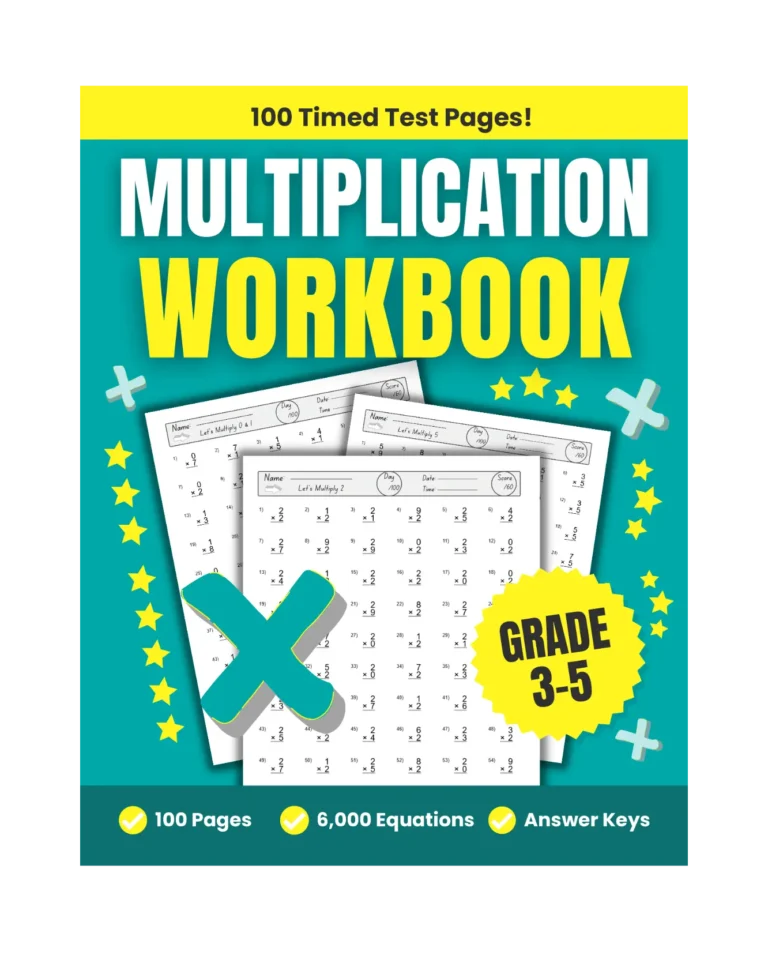
If you’re looking for structured multiplication practice, my Multiplication Worksheets Printable PDF includes 100 timed practice pages covering multiplication facts from 0–12, with 6,000 multiplication problems and answer keys.
Multiplication Worksheets Printable PDF
Don’t Rush Into Timed Tests
Timed practice can be useful, but I would not make speed the first goal.
If a child is still trying to understand what 6 × 4 means, giving them a one-minute test can create unnecessary frustration.
First focus on:
- Understanding equal groups
- Using arrays
- Recognizing patterns
- Building fact relationships
- Solving problems correctly
Then gradually introduce timed practice once the child has a solid foundation.
The goal is to develop fluency, which involves both knowing facts and being able to use efficient strategies.
What If Your Grade 3 Child Is Struggling With Multiplication?
Don’t immediately assume the child simply needs more memorization.
Go back to the concept.
For example, if the child doesn’t know:
4 × 6
draw four groups of six:
● ● ● ● ● ●
● ● ● ● ● ●
● ● ● ● ● ●
● ● ● ● ● ●
Now ask:
How many groups?
How many are in each group?
How many altogether?
Then connect the picture to:
4 × 6 = 24
This gives the child another way to understand the problem.
You can also ask:
“Do you know 2 × 6?”
If they do, help them see:
2 × 6 = 12
4 × 6 = 12 + 12
4 × 6 = 24
This turns a difficult fact into a problem they can reason through.
Use Mistakes as Teaching Opportunities
When a child gives a wrong answer, try not to immediately say, “No, that’s wrong.”
Instead ask:
How did you get that answer?
Their explanation can tell you a lot.
For example, if they answer:
6 × 7 = 36
ask them to show you how they worked it out.
Maybe they counted incorrectly.
Maybe they remembered a different fact.
Maybe they confused 6 × 6 with 6 × 7.
Once you know where the mistake came from, you can help them fix the underlying problem.
A Simple Grade 3 Multiplication Practice Plan
Here’s a simple weekly approach you can use at home.
Monday: Understand
Introduce a multiplication fact family using objects, drawings, or arrays.
Example:
3 × 4 = 12
Tuesday: Practice
Work through several problems using the same multiplication facts.
Wednesday: Use a Strategy
Show children how they can use an easier fact to solve a harder one.
Example:
5 × 7 = 35
So:
6 × 7 = 42
Thursday: Word Problems
Give them a few real-life multiplication problems.
Friday: Review
Mix the week’s facts and let the child solve them without help.
Keep the practice short and focus on understanding as well as accuracy.
When Should You Move Beyond Basic Multiplication?
Once a Grade 3 student becomes comfortable with multiplication facts and basic multiplication word problems, you can gradually introduce more challenging topics.
These may include:
- Multiplying larger numbers
- Division
- Two-step word problems
- Area and perimeter
- Multiplication involving multiples of 10
- More advanced multiplication strategies
For example, if a child understands:
3 × 4 = 12
they can begin to see:
30 × 4 = 120
This is where multiplication starts connecting with place value.
Keep Building Skills Step by Step
One thing I have found helpful with elementary math is not trying to teach everything at once.
Multiplication supports many skills that come later.
A child who develops a strong understanding of multiplication will eventually use it when working with division, fractions, area, measurement, and more advanced math.
For example, long division becomes much easier when a child is comfortable with multiplication facts.
If you’re also working on long division, you can take a look at my Long Division Math Workbook, a paperback practice resource for building long division skills.
A Final Tip for Parents and Teachers
If you are teaching multiplication to a Grade 3 student, don’t make memorization the entire lesson.
Start with meaning.
Show equal groups.
Draw arrays.
Use real objects.
Connect multiplication to addition.
Look for patterns.
Break difficult facts into easier ones.
Then give children regular practice so those strategies gradually become faster and more automatic.
That combination of understanding and practice is much more useful than simply asking a child to memorize a long list of multiplication facts.
And remember, children don’t all learn multiplication at the same pace.
If a child needs to use drawings or skip counting today, that’s okay.
The goal is to help them move from “I need to figure this out” to “I know this fact” over time.
More Multiplication Practice
If you want a structured multiplication resource for Grade 3 and beyond, you can find my Multiplication Workbook Grade 3–5 on Amazon. It includes 100 practice pages covering multiplication facts from 0–12.
👉Multiplication Workbook Grade 3–5
And if you’re looking for more Eshaal Maths math workbooks, you can browse the complete collection here: