When Do You Learn Long Division? (Grade-by-Grade Guide Every Parent Must Know)
Your child comes home with a worksheet full of boxes, arrows, and numbers stacked in odd places. You don’t remember math looking like this. So when do you actually learn long division, and is your child on track?
The short answer: most kids in the United States learn long division in 4th and 5th grade, with full mastery expected by the end of 6th grade. But the real answer depends on state standards, school pacing, and the skills your child already has in place. Here’s the complete, grade-by-grade breakdown.
What Grade Do You Learn Long Division?
In most U.S. schools, long division is introduced in 4th grade and becomes a core skill by 5th grade. This isn’t a guess — it’s written into the Common Core State Standards, which over 40 U.S. states use as their math framework.
Here’s how the skill builds, year by year:
| Grade | Age | What’s taught |
|---|---|---|
| Grade 2 | 7–8 | Basic division concepts, sharing equally |
| Grade 3 | 8–9 | Multiplication facts, simple division (basic facts) |
| Grade 4 | 9–10 | Division with 1-digit divisors, intro to long division |
| Grade 5 | 10–11 | Long division with up to 2-digit divisors |
| Grade 6 | 11–12 | Fluency with multi-digit division, including decimals |
What grade do you learn long division? According to Common Core standard 5.NBT.B.6, 5th graders are expected to “find whole-number quotients of whole numbers with up to four-digit dividends and two-digit divisors.” That single sentence is the textbook definition of long division.
Does grade 4 do long division? Partially. Fourth graders typically divide using 1-digit divisors (like 936 ÷ 4) under standard 4.NBT.B.6. The full method — with 2-digit divisors — arrives in 5th grade.
Why 4th and 5th Grade Mark the Real Turning Point
Division isn’t taught in isolation. It’s the final skill in a chain that includes place value, multiplication fluency, and subtraction with regrouping. That’s why the jump from grade 3 to grade 5 feels so steep — your child is stacking several skills at once.
Educators sometimes call this the “fourth-grade wall,” a point where math stops being purely about memorized facts and starts demanding multi-step reasoning. Long division sits right at that wall.
Skills You Need Before Learning Long Division
Long division rarely fails on its own. It usually breaks down because something underneath it is shaky. Think of it as a staircase — skip a step, and the whole thing wobbles.
Before your child can do long division, check these skills:
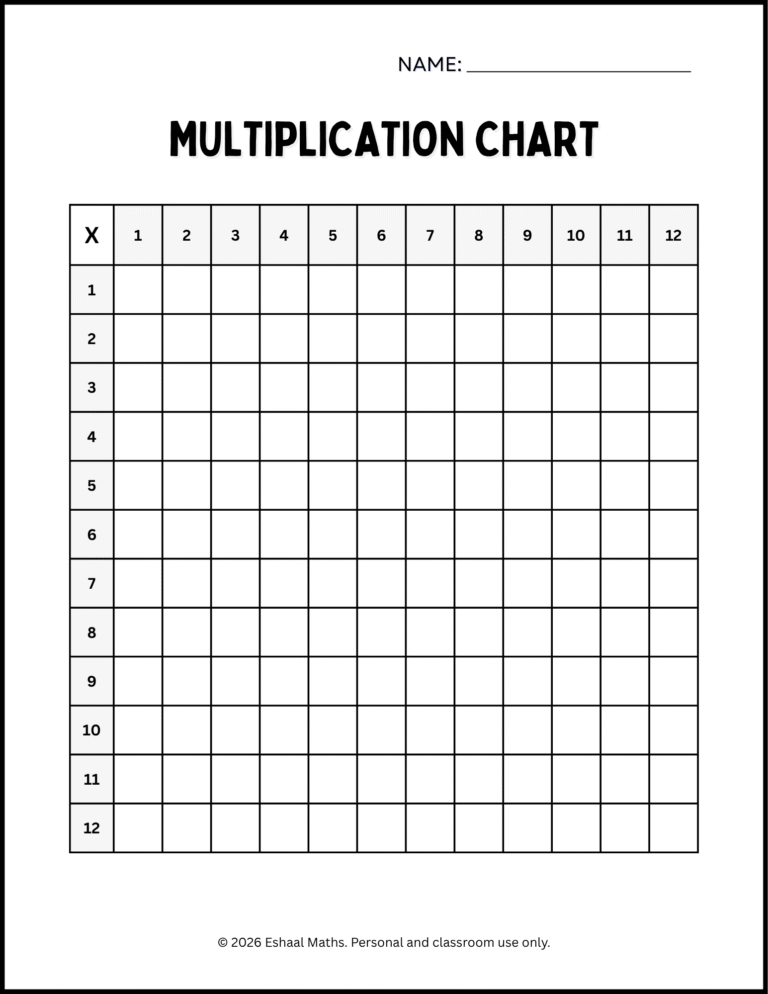
- Multiplication fact fluency — quick recall up to 12 × 12, without finger-counting
- Subtraction with regrouping — borrowing across multiple columns
- Place value understanding — knowing a “4” in 432 means 400, not 4
- Estimation — rounding to sanity-check an answer
- Basic division facts — knowing 48 ÷ 6 instantly, not working it out
If even one of these wobbles, long division becomes guesswork instead of a process. A quick diagnostic check — asking your child to solve 473 − 165 or recall 7 × 8 on the spot — tells you more about readiness than any worksheet grade.
How Long Division Works, Step by Step
The long division method follows five repeatable steps, often remembered with the mnemonic “Dad, Mother, Sister, Brother” (Divide, Multiply, Subtract, Bring down) — a trick teachers use because it turns an abstract algorithm into something memorable.
The five steps:
- Divide — how many times does the divisor fit into the first part of the dividend?
- Multiply — multiply that number by the divisor
- Subtract — subtract the result from the dividend
- Bring down — bring the next digit down
- Repeat — until there’s nothing left to bring down
Worked example: 639 ÷ 3
- 6 ÷ 3 = 2 → write 2
- 2 × 3 = 6 → subtract: 6 − 6 = 0
- Bring down the 3 → 3 ÷ 3 = 1
- Bring down the 9 → 9 ÷ 3 = 3
- Answer: 213
Long Division vs. Short Division
Short division (sometimes called the “bus stop method”) handles the same math but skips writing out the subtraction — it’s done mentally. Long division writes every step out, which makes it slower but far less error-prone for bigger numbers, like 4-digit dividends split by 2-digit divisors.
A Real-Life Example
Long division isn’t just a worksheet skill. If 1,248 juice boxes need to be split evenly across 24 classrooms, long division tells you exactly how many each room gets (52) — no guessing, no remainder confusion.
Is Long Division Hard? Why Kids Struggle
Is long division hard? For many kids, yes — and there’s a real reason why. A 2019 analysis from the National Center for Education Statistics found that multi-step arithmetic, including long division, is one of the most commonly missed skill areas on national math assessments in grades 4 through 6.
Common mistakes kids make:
- Misaligning digits in columns, throwing off place value
- Forgetting to bring down the next digit
- Guessing the quotient instead of estimating it
- Mixing up the divisor and dividend positions
Signs your child may be behind:
- Still counting on fingers for multiplication facts in grade 5
- Can follow the steps with help but forgets them the next day
- Avoids written methods and tries to solve everything mentally
The fix isn’t more long division drills — it’s going back one step. If multiplication facts are shaky, fix those first. Short, consistent practice (10–15 minutes, a few times a week) beats long, frustrated study sessions every time.
Does Every State Teach Long Division the Same Way?
Not quite. While Common Core is the most widely adopted framework, states like Texas (which uses its own TEKS standards) and Virginia set their own pacing. Some schools also use curricula like Eureka Math or Singapore Math, which may introduce long division earlier or structure the steps differently.
This is why one 4th grader might already be dividing by 2-digit numbers while a classmate’s cousin in another state hasn’t started yet — it’s not a sign of falling behind, just a difference in curriculum timing.
Frequently Asked Questions
At what age do you do long division?
Most children learn long division between ages 9 and 11, corresponding to 4th and 5th grade in the U.S. school system.
Does grade 4 do long division?
Yes, partially. Grade 4 students typically divide using 1-digit divisors. Full long division with 2-digit divisors is a 5th-grade standard.
What year do you learn long division?
In the U.S., long division is fully introduced in 5th grade (ages 10–11), following Common Core standard 5.NBT.B.6.
Do you learn long division in year 5?
If referring to the UK “Year 5” system, students there typically learn short division, with full long division arriving in Year 6. In the U.S. grade system, the equivalent skill lands in 5th grade.
Is long division hard?
It can be challenging because it combines multiplication, subtraction, and place value into one multi-step process. Most difficulty traces back to gaps in earlier skills, not the method itself.
Is long division taught in 5th grade?
Yes. 5th grade is when Common Core standards require fluency with long division using up to 2-digit divisors.
Final Thoughts
Long division isn’t one single lesson — it’s the finish line of years of math building blocks. Most kids in the U.S. learn it in 4th and 5th grade, and struggling with it usually points to a gap lower down the staircase, not a lack of ability. Strengthen the basics, practice in short bursts, and the method clicks far faster than expected.